How to Write a Cover Letter That Actually Works
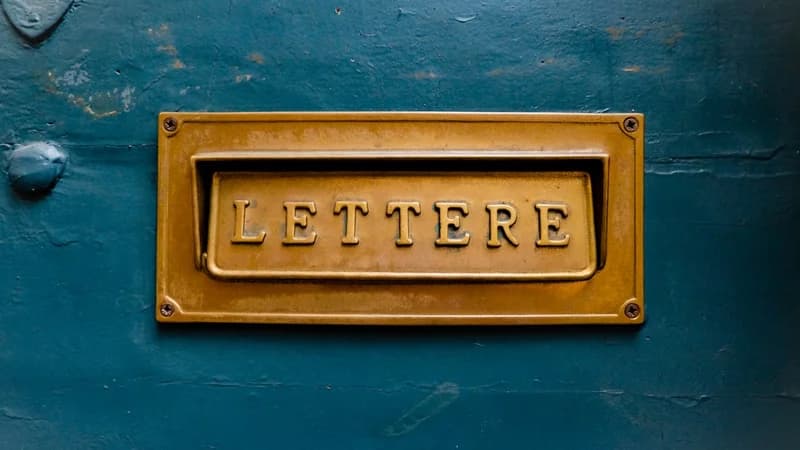
The cover letter is the most neglected part of most job applications. Candidates spend twenty minutes on it at the last minute, recycle a generic version from a previous application, copy a few phrases from an online template — and hit send. The result is a letter the recruiter skims in ten seconds before moving on to the next one.
And yet, a well-crafted cover letter can tip the scales. When two candidates are equally qualified on paper, it is often the cover letter that makes the difference. And contrary to what many people think, writing a compelling letter is not about writing talent — it is about method.
What Recruiters Actually Read — and What Makes the Difference
Here is the reality: a recruiter spends an average of 3 to 7 seconds on a cover letter during the first screening pass. Not because they are lazy — but because they receive dozens of letters a day and are scanning for specific signals.
What they look for in the first 3 seconds:
- The opening (first paragraph) — is it generic or specific?
- The length — one page or two?
- The tone — formal or human?
What triggers a full read:
- A first sentence that is clearly not copy-pasted
- A specific reference to a project or reality at their company
- A concrete number or achievement early in the body
What triggers immediate archiving:
- "In response to your job posting, I would like to submit my application"
- "As a passionate [industry] professional, I am excited to join your dynamic team"
- Two pages of dense text with no visual structure
- A typo in the first sentence
A good cover letter is always read in full. When a recruiter starts reading a letter that hooks them from the first line, they do not stop. That is your goal: keep them reading.
The 3 Types of Cover Letters: Structure and Tone
Not all cover letters are written the same way. Depending on your situation, the structure and tone change significantly.
Type 1 — Response to a Job Posting
The most common scenario. The company has defined a specific need; you are responding to it.
Structure: anchor yourself in the posting from the very first line. Show that you read the listing carefully, mirror its language, and build your argument around the specific responsibilities listed. The recruiter should feel that you wrote this letter for this role — not a template you adapted.
Tone: professional and targeted. Every paragraph should address an explicit need from the posting.
What changes: you can open with "What drew me to this specific role..." followed by a precise reference to the listing itself.
Type 2 — Unsolicited / Spontaneous Application
You are applying without a posted opening. Higher risk but can unlock opportunities that are not yet visible.
Structure: you need to create the need. Start from a market observation or a challenge specific to the company's sector, then position yourself as the person who can address it. The letter is less about "here is what I know" and more about "here is why your company needs someone like me right now."
Tone: more initiative-driven, more direct. You are taking space because no one offered it to you.
What changes: clearly state the type of role you are targeting, and consider proposing a 15-minute call rather than a formal interview.
Type 3 — Referral or Network Introduction
Someone connected you or referred you. This is the most favorable scenario.
Structure: mention the referral in the very first sentence. It is your strongest asset — use it. Your letter can be shorter (trust is pre-established), but it still needs to make a genuine argument.
Tone: warmer, more direct, less formal. The human connection is already established.
What changes: "Sarah Johnson suggested I reach out to you directly after she mentioned the transformation your operations team is currently going through..." passes the 3-second test without even trying.
The Complete Structure — A Full Example, Paragraph by Paragraph
Here is a complete example for a Senior Product Marketing Manager role at a growth-stage SaaS company:
[Opening — 4 lines]
"When I saw that Arcana was scaling its enterprise product into the European market, I immediately understood why you need a senior PMM who has been there before. At DataFlow, I led the go-to-market for our enterprise tier across the UK, Germany, and France — and I built the playbook from scratch."
Why it works: specific company reference, identifies the underlying need, establishes profile relevance immediately.
[Body — 8 lines]
"Over 18 months, I drove three enterprise product launches, managing a combined budget of $600K. Results: 70% increase in qualified pipeline and a 25% reduction in sales cycle length — directly tied to sharper positioning and tighter sales enablement. I collaborated daily with Sales, Ops, and Customer Success, which gave me a clear-eyed view of what GTM breakdowns look like and how to avoid them.
What excites me about your open role is the international scope combined with early-stage enterprise motion — this is where I have built my strongest muscle, and I bring the frameworks, the content library, and the cross-functional credibility to hit the ground running."
Why it works: concrete numbers, direct connection to the role, demonstrates understanding of the specific challenge.
[Closing — 3 lines]
"I would welcome the opportunity to discuss how my experience maps onto your current launch priorities. Available for a call at your convenience — reach me at [phone] or via email."
Why it works: clear interview request, active voice, no robotic closing formula.
The Opening: Phrases to Avoid and Powerful Alternatives
Here are the opening lines recruiters see dozens of times a day — and that immediately send your letter to the "generic" pile:
Always avoid:
- "In response to your job posting on [site], I would like to submit my application for..." (half of all candidates start this way)
- "As a passionate [industry] professional, I am excited to join your team..." (unverifiable, unmemorable)
- "With X years of experience in [field], I believe I have the skills required for..." (self-focused, not company-focused)
- "Having graduated from [school] in [year], I possess the qualifications necessary to..." (starts with you, not with the company's need)
Powerful alternatives — with real industry examples:
Tech: "When I read that you are migrating your infrastructure to Kubernetes, I wanted to reach out directly — I led exactly that transition at my current employer, covering 40 microservices over six months."
Sales: "What convinced me to apply here rather than elsewhere is your customer-first revenue model — a framework I have been looking for since leaving my last company and one I know how to activate."
Healthcare: "Your oncology department is cited as a regional reference for precision medicine protocols — an area where I have built a specific clinical expertise over four years at [Hospital]."
HR: "The culture transformation you are leading — moving to a distributed team while maintaining performance accountability — is exactly the change management challenge I drove at [Company] for 300 employees."
These openings signal genuine preparation. By definition, they cannot be recycled from one application to the next — which is precisely what makes them effective.
How to Personalize for Every Application
Personalization is what separates a letter that works from one sent into a void. Here are the concrete steps:
Company research (15-20 minutes):
- Read the company's "About" page and mission statement
- Look up recent news (funding rounds, product launches, expansions)
- Browse their LinkedIn presence and social media
- Check Glassdoor reviews to understand the internal culture
Job posting analysis:
- Highlight skills and qualities mentioned twice or more (these are the most important)
- Identify the tone of the posting (formal vs. casual — your letter should match it)
- Note the key responsibilities that must be addressed in your body paragraphs
Mirroring:
- Your letter should incorporate some of the posting's vocabulary
- Every argument you develop should connect to an explicit need in the posting
Tone and Style: Professional, Not Robotic
Your letter should be professional and direct — but not cold or robotic. You are a human being addressing another human being.
A few style principles:
- First person: always write "I" (never refer to yourself in the third person)
- Short sentences: maximum two lines per sentence, or you will lose the reader
- Active voice: "I developed" rather than "a strategy was developed by me"
- Concision: if a word can be removed without loss of meaning, remove it
- Mandatory proofreading: have someone who does not know the role read your letter — if it is clear to them, it will be clear to the recruiter
Avoid vague self-proclaimed adjectives: "motivated", "dynamic", "rigorous" — everyone claims to be these things. Instead, use concrete achievements that demonstrate these qualities without naming them.
Ideal Length: One Page, No More
The rule is simple and absolute: one page maximum. Three to four paragraphs, between 280 and 380 words.
A recruiter receiving dozens of letters has neither the time nor the inclination to read two pages. If you need two pages to introduce yourself, it means you have not yet done the work of selection and synthesis.
A useful breakdown:
- Opening: 3-5 lines
- First body paragraph: 6-8 lines
- Second body paragraph (optional): 4-6 lines
- Closing: 3-4 lines
Format and Layout
Your cover letter's formatting should be clean but understated. Here are the expected elements:
- Header: your contact details (name, email, phone, city) — some add a LinkedIn URL or portfolio link
- Recipient: company name, hiring manager's name if known (worth checking on LinkedIn)
- Date: aligned to the right
- Subject line: "Application for [exact job title]"
- Salutation: "Dear Hiring Manager," if the name is unknown; "Dear [Name]," if known
- Body: justified or left-aligned according to your preference
- Closing: keep it simple — "I look forward to hearing from you. Kind regards,"
- Signature: your full name
Use the same font as your resume for visual consistency. A readable font, size 11 or 12, with reasonable margins.
The 7 Mistakes That Get Your Letter Discarded
1. Restating your resume The letter is not a summary of your resume. It should illuminate it, not repeat it.
2. Talking about yourself without mentioning the company A letter that starts and ends with "me, me, me" without ever referencing the company's needs or projects reads as self-centered, not motivated.
3. Generic, all-purpose phrases "I am a dynamic, rigorous, and passionate professional." This phrase does not distinguish you — it drowns you in the crowd.
4. Spelling and grammar mistakes A typo in a cover letter is a dealbreaker in many industries. Use a spell checker, then read aloud, then have someone else proofread.
5. The generic, unpersonalized letter If your letter could be sent to 50 different companies without changing a word, it is worthless to all of them.
6. Too long Two pages is twice too long. One dense page is already a lot.
7. Too short and too vague A vague introductory paragraph and a generic closing are not a cover letter. You need to make an argument.
Cover Letter by Email vs. PDF
When applying by email, the question arises: do you put your letter in the email body, or send it as an attachment?
Letter in the email body:
- Better suited for spontaneous applications or informal sectors
- The email subject should be explicit: "Application — [Position] — [Your Name]"
- Shorter format (200-280 words)
- A simple closing ("Best regards") is more appropriate than a formal sign-off
Letter as a PDF attachment:
- Preferable when the posting explicitly asks for it
- Preserves your formatting and typography
- The email body becomes a brief 3-4 line introduction inviting the recruiter to review the attached documents
In all cases, name your files properly: "Cover_Letter_FirstNameLastName_Position.pdf" and "Resume_FirstNameLastName_Position.pdf". A recruiter who receives a file named "finalletterfinal_v3.pdf" will have a poor first impression before even opening it.
Conclusion
A cover letter that actually works is not a brilliant letter — it is a precise one. Precise in its targeting, precise in its argumentation, precise in its length. It shows that you took the time to understand the company and to choose this role, not merely to apply for it.
Method, personalization, clarity: these are the three pillars of an effective cover letter. Writing talent helps, but it is not what makes the difference — preparation is what counts.
And if your resume matches the quality of your cover letter, your application becomes genuinely formidable. Our CV Builder helps you create a professional, well-structured resume in minutes, with templates tailored to every industry. Try it for free and submit a complete application that inspires confidence from first glance.